ENGINEERING ANSWER
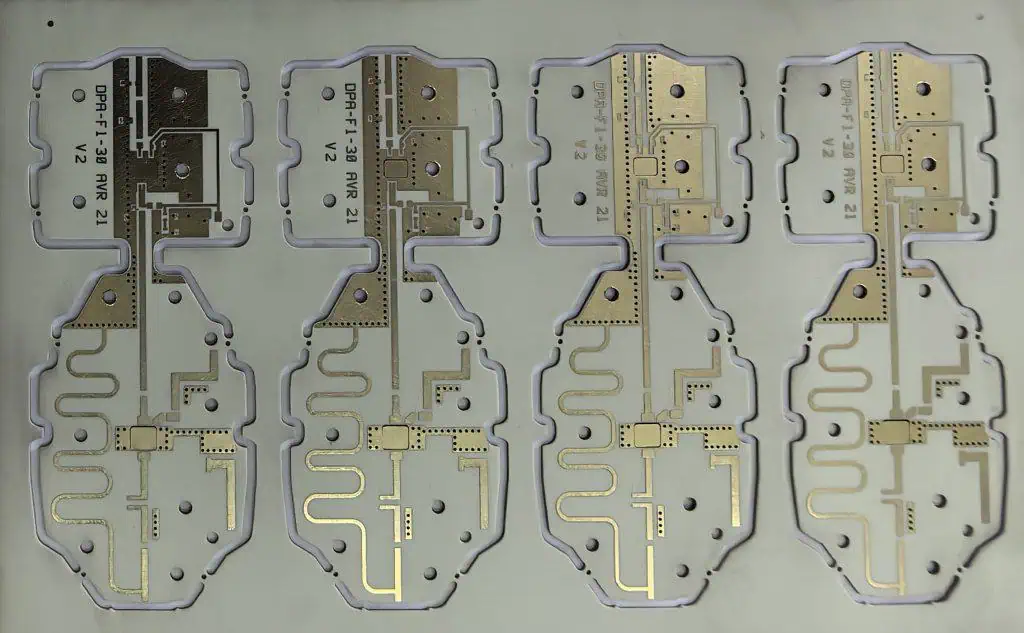
Microwave filters use carefully controlled resonant and coupled structures. The laminate is relevant because the electrical length and loss of those structures influence center frequency, bandwidth and rejection.
What to decide before release
Specify the required passband and stopband before selecting a topology. Use realistic fabrication tolerance sweeps and include the package or shield. Consider tuning provisions for early prototypes where appropriate.
Checks to put in your design brief
- Define insertion-loss and rejection limits
- Evaluate gap sensitivity
- Plan a calibrated test fixture
Important distinction
A simulated nominal response is not a production tolerance analysis.
Sources & basis
Material facts follow the cited source. Design checks are preliminary guidance, not supplier process instructions.